
Porcelain Venus
The Original
No painting of a woman has ever been just a painting.
The painted nude has always been a negotiation — who wants it on the wall and who wants it taken down. Women have always been part of that conversation. That discomfort you feel standing in front of a nude is real. So is the desire. Women have always felt both — and it has always been the woman in front of the painting, not the one inside it, who decides what it means.
For centuries the female nude has survived everything thrown at it — desire, shame, worship, condemnation, Titian, Courbet, Matisse. The tradition endures not because men protected it but because the argument around it never resolved. It still hasn't. The Original asserts that the woman in the painting was never the subject. She was the source.

A Renaissance Venus

Wildflower
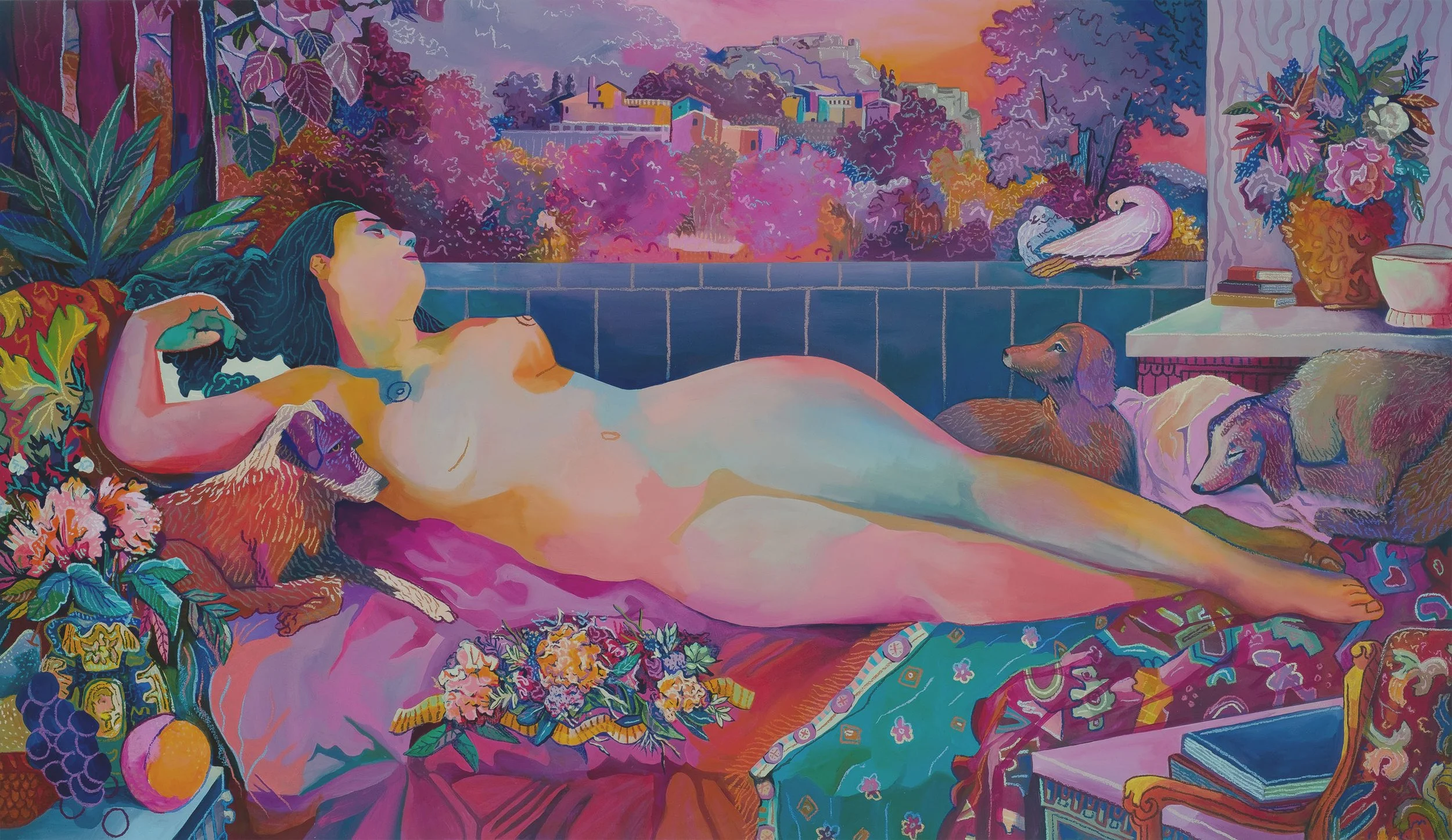
Eventide

A Rose-Colored Venus

Rococo Pink Madonna
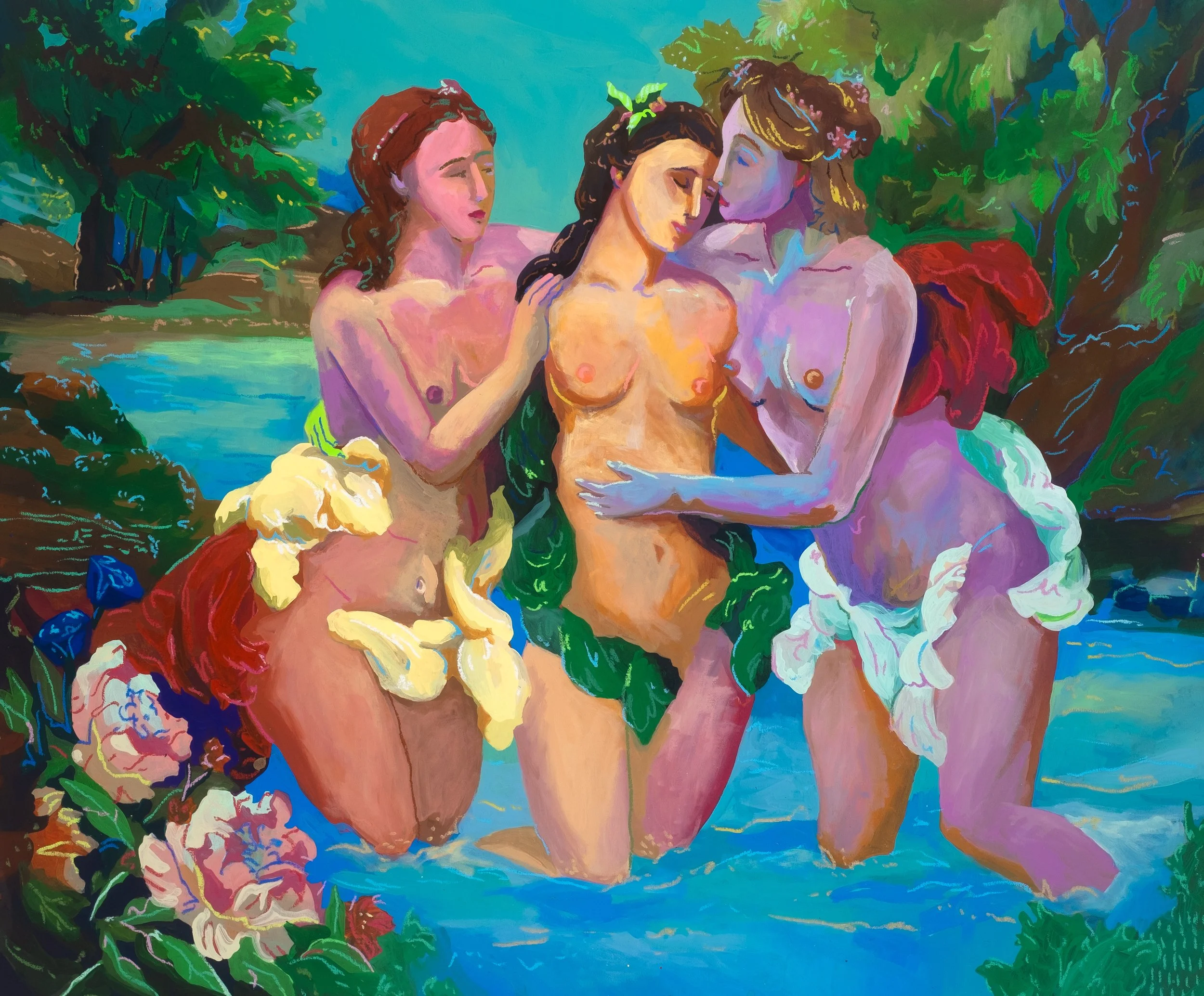
The Sirens

Yellow Madonna

Bleu Vert Madonna

Claire's Lute
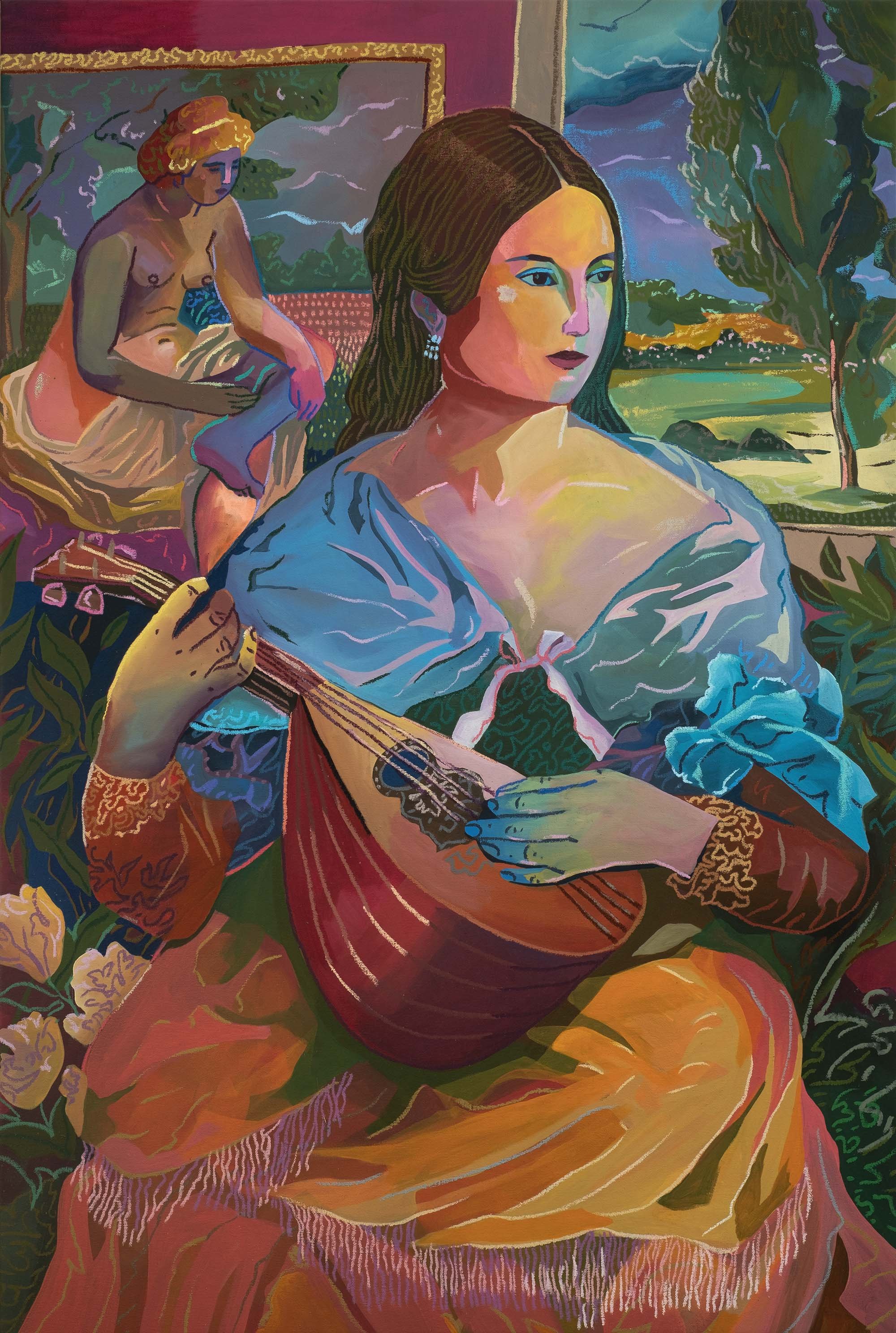
Mandolin Practice

Celine
The artist does not construct the woman. The artist encounters her. The painting is a record — a of the painter's submission to something that existed, completely and independently, before the first mark was laid down.
These paintings appropriate the poses, the compositions, the iconographic vocabulary of the Western figurative canon — and then do something that canon rarely permitted: they surrender authority to the figure. The artist does not construct the woman. The artist encounters her. The painting is a record — a document of the painter's submission to something that existed, completely and independently, before the first mark was laid down.
That submission has a name. It is the honest pursuit of perfectly imperfect. But imperfection and the female form is an argument Western art has been having with itself for five hundred years. It has humbled the greatest painters who ever lived, not only because she is beautiful — women know better than anyone what perfect costs — because beauty alone has never been enough to keep a museum full of painters coming back. She simply cannot be resolved. That is the point. These paintings don't attempt to resolve what the centuries could not. They pursue the perfect line — not as a cultural verdict of what "perfect" looks like– but as an act of devotion to the fact that perfection was never the painter's to give. It was always already hers.
Outside the studio, nobody was equipped to let a body simply be. Looking felt like transgression. Being looked at felt like reduction. So she became Venus. She became Mary Magdalene. The allegory was armor for her and absolution for him — and the painters obliged because everyone needed it to hold: the patrons, the pious, the proper, the proud. The familiar references — Boucher, Titian — are just the frame. She was. What you are looking at is not homage. It is correction.
These women were never the object within the painting. They are the reason the painting exists at all — she was always the original.
the original functions as a sustained subversion of the classical figurative tradition. utilizing a methodology of "rogue chromaticism," the work recontextualizes five centuries of representational iconography through an iterative layering of oil pastel over acrylic. the output prioritizes subjective tonal logic and linear precision, positioning the kansas studio as a primary site for the reconsideration of the painted female form.
filed under: rogue colorist, the nude, figurative canon, chromatic subversion
the original
to discuss availability, dimensions, or acquisition, please open a direct inquiry. the studio provides additional imagery and contextual details upon request.